

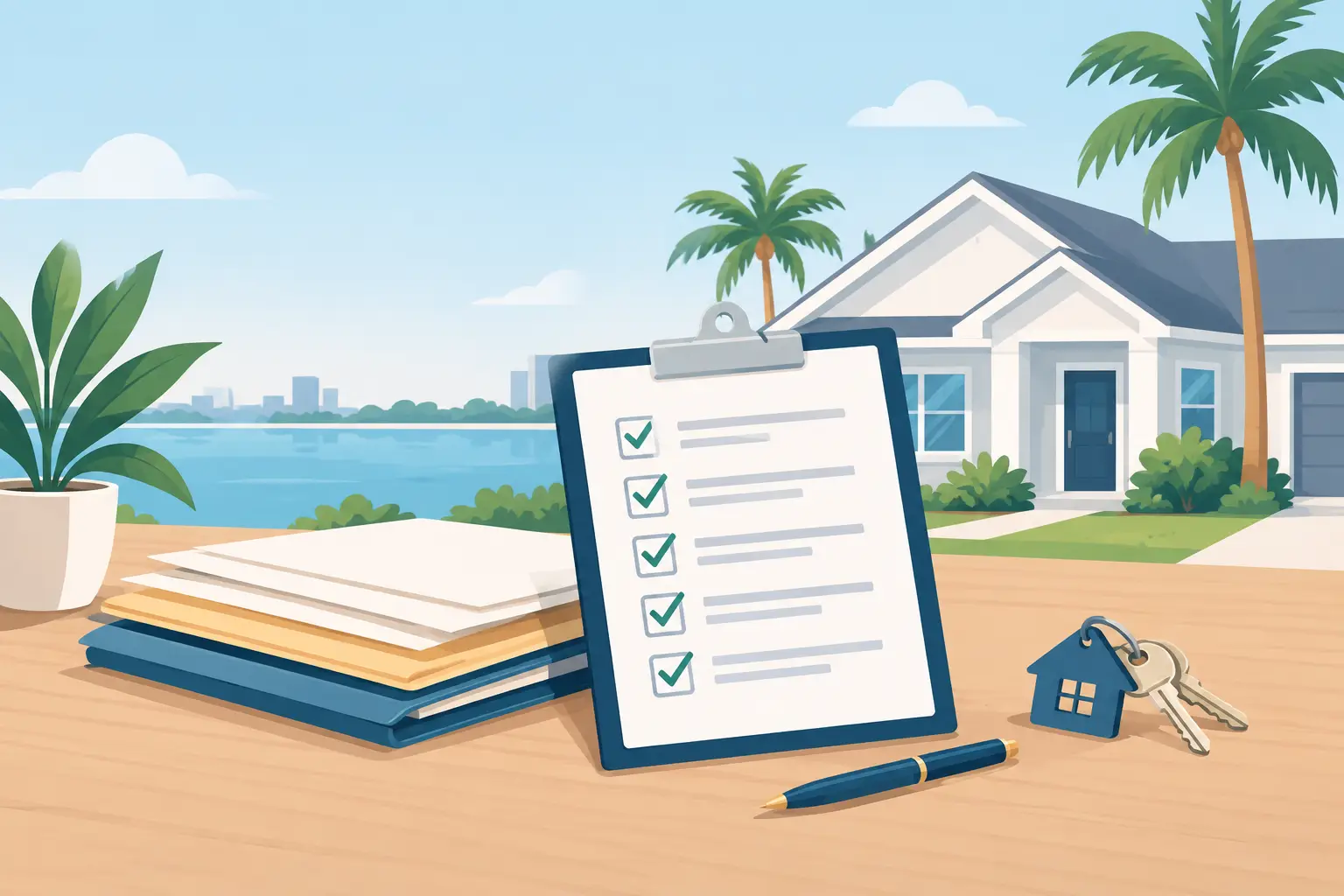
A missing document rarely stops a Florida home sale on day one. More often, it surfaces after a buyer is under contract, a lender is reviewing the file, or the title company needs an answer before closing. A complete seller document checklist gives you time to find records, correct inconsistencies, and keep the transaction moving without last-minute pressure.
The exact paperwork depends on your property, your ownership history, and the terms of the contract. A single-family home with no improvements needs a different file than a condominium, an estate sale, or a property held in an LLC. Still, getting organized before your home goes live makes showings, negotiations, inspections, and closing more manageable.
Start With Ownership and Property Records
Your broker and title professional will verify ownership through public records and a title search, but sellers should gather the documents they already have. These records help identify issues early, especially if names have changed, a trust or business owns the property, or the home was inherited.
Keep your most recent deed, owner’s title insurance policy if available, closing statement from when you bought the home, and any survey in one folder. A prior survey may not be acceptable for every buyer or lender, but it can help explain lot lines, easements, fences, and improvements. Do not assume that a fence marks the legal boundary.
If you have a mortgage, locate your latest loan statement and payoff lender contact information. The title company generally orders the official payoff, but accurate loan information reduces back-and-forth as closing approaches. Also disclose any home equity line of credit, even if the balance is zero. A HELOC can remain recorded against the property and may require a release before title can transfer.
Sellers should also flag potential title matters rather than hoping they disappear. These can include judgments, liens, unpaid contractor claims, divorce-related ownership changes, probate issues, or an old mortgage that appears to have been paid but was never properly released. A title search determines what must be resolved, and the earlier it begins, the more options you have.
Seller Document Checklist for Disclosures
Florida sellers have a duty to disclose known facts that materially affect the value of a residential property and are not readily observable to a buyer. The required approach is not to create a dramatic list of every minor repair. It is to be honest, specific, and timely about known conditions that could affect a buyer’s decision.
A written seller disclosure form is a practical way to organize that information. Complete it carefully and update it if something changes while the home is listed. If the roof leaked during a storm and was repaired, disclose the history and retain the repair invoice. If the pool equipment is working but nearing the end of its useful life, a clear explanation is better than a vague answer after inspection.
Your disclosure file should include records related to major systems and known conditions, such as:
- Roof replacements, repairs, warranties, and permits
- HVAC installation, service history, and warranties
- Plumbing, electrical, foundation, drainage, or water-intrusion repairs
- Termite or wood-destroying organism treatment records
- Mold remediation, insurance claims, and restoration work
- Pool, dock, seawall, solar, septic, well, or irrigation records when applicable
Not every receipt needs to be handed to a buyer before an offer. The purpose of collecting them is to support accurate disclosures and answer legitimate questions quickly. A repair invoice also does not guarantee a buyer will waive inspections. Buyers may still investigate the property, negotiate repairs or credits, or choose not to proceed if permitted by their contract.
If you made improvements without permits, speak with your broker and, when appropriate, a qualified legal or permitting professional before listing. The answer is not always the same. Some work may be exempt, some may have been properly completed under a previous owner, and some may need additional review. Accurate representation matters more than trying to make the issue sound smaller than it is.
Add HOA, Condo, and Community Documents Early
For homeowners association and condominium properties, association paperwork is often one of the most time-sensitive parts of the transaction. Buyers may need governing documents, budgets, financial information, rules, applications, and an estoppel certificate showing amounts owed to the association.
Start by gathering the documents you already received from the association: declarations, bylaws, rules, recent budgets, notices of special assessments, and contact details for the manager. If you know of a pending assessment, litigation, rental restriction, pet restriction, or upcoming major project, address it directly with your broker. These details can influence a buyer’s financing, timeline, and willingness to move forward.
An estoppel certificate typically must be ordered from the association or management company. Fees, delivery times, and expiration periods vary. It is smart to identify the process before you accept an offer, particularly in larger condominium communities or associations with slower administrative turnaround.
Prepare Documents That Support Marketing and Showings
The documents that help sell a home are not always closing documents. They help your broker market the property accurately and give buyers confidence in its condition and features.
Gather utility averages, a floor plan if you have one, appliance manuals, transferable warranties, and a list of upgrades with approximate dates. Include practical details such as the age of the roof, water heater, HVAC system, and major appliances. If your home has hurricane-impact windows, solar panels, a generator, a water treatment system, or smart-home equipment, identify whether those items are owned, financed, leased, or excluded from the sale.
This distinction is especially important for solar equipment. A buyer needs to know whether panels will transfer free and clear, whether there is a loan payoff, or whether a lease or power purchase agreement requires an assumption. Do not wait until contract review to find the agreement.
For showings, remove sensitive information from view. Store account numbers, alarm codes, personal financial records, and identity documents securely. A buyer may reasonably want to see receipts or warranties later, but a showing should not expose your private information.
Be Ready for Contract and Closing Requests
Once you accept an offer, your seller document checklist becomes a working transaction file. The contract, addenda, inspection responses, repair agreements, title communications, and closing documents all need prompt attention. Delays often happen because a request sits unanswered while the closing date gets closer.
If the property is owned by more than one person, confirm early who must sign. For a trust, estate, corporation, LLC, or power of attorney situation, the title company may request formation documents, trust certifications, court orders, death certificates, or authorization records. These are not unusual requests. They are part of confirming that the correct person has authority to sell.
Florida sellers may also receive documents related to FIRPTA at closing. This federal tax withholding process can apply when a seller is a foreign person for tax purposes. Citizenship, residency, and tax status can be more complicated than they appear, so sellers with questions should seek advice from a qualified tax professional rather than making assumptions.
Keep communication centralized. Your broker can help coordinate the listing, offers, negotiations, and contract steps, while the title company handles title, settlement, and many closing-specific requests. Respond quickly, but do not sign forms you do not understand. Ask what the document does, why it is needed, and whether your attorney, CPA, lender, or association manager should review it.
A Simple Way to Organize Your File
Create a digital folder with separate sections for ownership, disclosures, repairs and permits, association documents, warranties, and contract or closing records. Name files clearly with the document type and date, such as Roof Replacement Invoice 2023 or HOA Special Assessment Notice April 2026. Clear file names save time when a buyer, inspector, broker, or title closer asks for a record.
You do not need a perfect archive before listing. Start with what you have, identify gaps, and be transparent about records that are unavailable. Professional broker support can help you understand what information is most relevant to buyers and where a missing document may create a real transaction issue.
A well-organized file will not eliminate every inspection concern or negotiation request. It does give you a calmer, more credible position when questions arise - and that can make the path from listing to closing far easier to manage.