


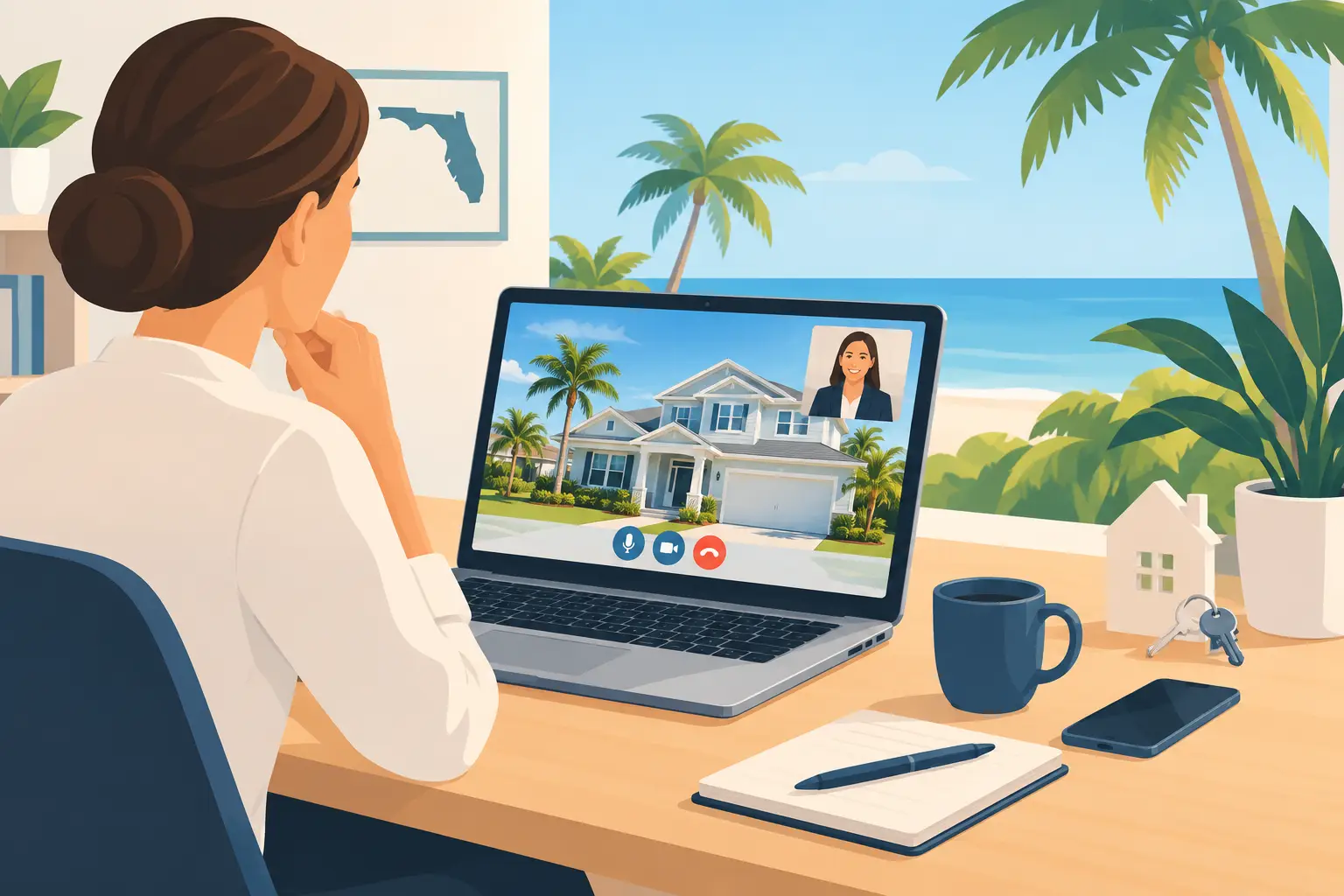
A move for work, an inherited property, a rental portfolio, or a second home can leave you needing to sell from hundreds or thousands of miles away. Selling a Florida home remotely does not mean handing over control. It means building a process that keeps you informed, protects the property, and gives buyers a professional experience from the first online listing through closing.
The practical challenge is not simply signing documents electronically. A successful remote sale requires accurate pricing, strong marketing, responsive showing coordination, careful offer review, and someone local who can help keep the transaction moving when an in-person issue arises. Technology makes those steps easier to manage, but licensed broker guidance still matters when real money, contracts, and deadlines are involved.
What Remote Home Selling Actually Requires
A remote sale works best when responsibilities are clear from the start. You remain the decision-maker on price, offer terms, repair requests, and closing instructions. Your broker manages the listing strategy and transaction process, while local vendors and the buyer's representatives handle the physical access points that cannot be completed through a screen.
For most Florida sellers, the process begins with a property review using public records, recent comparable sales, property details, and current market activity. Video walkthroughs, photos, prior inspection reports, rental documents, and information about improvements can fill in gaps when you are not at the home.
Remote does not mean detached. You should expect regular communication about showing feedback, market response, offers, inspection timelines, appraisal status, and closing requirements. A clear digital workflow helps reduce unnecessary back-and-forth while ensuring you can review material decisions before they are made.
Prepare the Property Before It Goes Live
The condition of an empty or occupied home matters even more when the owner is out of state. Buyers notice neglected landscaping, dark rooms, stale air, visible leaks, and signs that a property has been sitting unattended. A home can be marketed remotely, but it still has to show well in person.
Start by confirming who has access to the home and who can respond if something needs attention. That may be a trusted neighbor, tenant, property manager, cleaner, handyman, or family member. If the property is vacant, arrange for basic oversight, especially during Florida's rainy season or hurricane season. A small plumbing issue, an air conditioning failure, or a fallen branch can become a larger problem if no one sees it quickly.
Before photography, address obvious maintenance items and remove personal belongings where practical. Professional real estate photography gives buyers an accurate first impression and supports MLS exposure across major real estate websites. It cannot compensate for a cluttered, poorly maintained, or inaccessible property.
Gather documents early
Remote sellers should collect property records before an offer arrives. Depending on the home, this can include the survey, prior title policy, permits, warranties, homeowner association information, lease agreements, utility details, and records of major repairs or improvements.
If the property is in an HOA or condominium association, confirm the current application process, transfer fees, approval requirements, and contact information. Condominiums may also have additional documents or buyer review periods that affect the contract timeline. Early preparation helps avoid a last-minute scramble after a buyer is already under contract.
Price for the Market, Not for Distance
One of the biggest mistakes in selling a Florida home remotely is setting the price based on an outdated online estimate or an amount needed for the next purchase. Buyers compare active listings and recent sales quickly. If the home enters the market too high, the initial exposure period can be wasted before a price adjustment becomes necessary.
Pricing guidance should account for the home's location, condition, upgrades, competing inventory, recent closed sales, buyer demand, and likely financing considerations. A waterfront property, new construction community, historic home, or condominium may require a more specialized analysis than a typical single-family home.
Remote sellers should also think in terms of net proceeds, not just the list price. Review the expected listing fee, potential buyer broker compensation, closing costs, mortgage payoff, association balances, repair concessions, and any seller credits that could arise during negotiation. A higher offer is not always the stronger offer if it carries weak financing, broad contingencies, or costly requests.
How Showings Work When You Are Not Local
You do not need to be present for every showing. In fact, sellers are typically better served when buyers can view the home without the owner nearby. The important issue is secure, organized access.
A professional listing process coordinates showing requests, confirms appointments, and communicates instructions to the appropriate parties. If the home is occupied by a tenant or family member, showing windows should be realistic and clearly communicated. Excessively limited availability can reduce buyer interest, particularly in competitive local markets where buyers want to see a property quickly.
For vacant homes, make sure the property is clean, lit appropriately, and safe to enter. Provide clear information about alarms, gates, pets, parking, and any areas that should not be accessed. If a seller has a local contact, that person can help with occasional needs such as replacing a lockbox battery, resetting an alarm, or checking the home after severe weather.
Review Offers Beyond the Purchase Price
Digital signatures and secure document sharing allow remote sellers to review and sign offers efficiently. However, speed should not replace careful evaluation. Florida contracts include deadlines and contingencies that can materially affect your outcome.
Look at the buyer's financing type, proof of funds or lender preapproval, deposit amount, inspection period, appraisal contingency, proposed closing date, requested concessions, and personal property included in the sale. A cash offer may have fewer financing risks, but its price and inspection terms still matter. A financed offer may be excellent if the buyer is well-qualified and the contract is structured responsibly.
This is where negotiation assistance is valuable. The goal is not simply to accept the first acceptable number. It is to negotiate terms that support a reliable closing while protecting your position on repairs, credits, timelines, and contingencies. Your broker can help explain the practical trade-offs, but the final decision remains yours.
Keep the Contract Period Organized
Once under contract, a remote sale becomes a deadline-driven process. The inspection, appraisal, loan approval, title work, association requirements, repair negotiations, and final walkthrough all need attention. Most transactions do not fail because of one dramatic event. They become difficult when small items are ignored until the deadline is close.
Maintain one organized place for contract documents, disclosures, invoices, repair receipts, and communications. Respond promptly when the title company, lender, association, or broker requests information. If inspection issues arise, obtain local estimates when needed rather than agreeing to a credit without understanding the likely cost.
Be realistic about repair logistics. It may be more efficient to offer a negotiated credit in some situations, while another issue may need to be repaired before closing because of the buyer's financing, insurance requirements, or the property's condition. The right approach depends on the contract, the buyer, and the specific problem.
Plan for a Remote Florida Closing
Many Florida closings can be handled with electronic documents, mobile notaries, mail-away packages, or remote online notarization when permitted and coordinated with the closing agent. The available method depends on the title company, lender requirements, document type, and your location. Confirm the plan well before closing week.
If you are selling an inherited home, a property held in a trust, or a home owned by an entity, allow extra time for authority documents and title review. Sellers with an existing mortgage should also verify payoff procedures and watch for wire fraud. Always confirm wiring instructions directly with the closing agent using a trusted phone number, not contact information contained only in an email.
A technology-driven broker model can make remote communication, marketing, showing coordination, offer management, and contract support more efficient. At My List Pro, that efficiency supports a 1% listing commission while sellers still receive professional photography, MLS exposure, negotiation assistance, and broker-led support through closing. Buyer broker compensation, closing costs, and other transaction expenses should be discussed separately based on the listing agreement and market conditions.
Selling from a distance is most successful when the home is prepared, the pricing is grounded in current market data, and every party knows who is responsible for the next step. Choose a process that keeps you informed without requiring you to be physically present for every detail.